

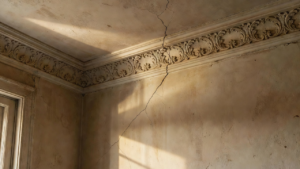
Ever stood in an old Soulard two-flat and noticed that hairline crack snaking across the ceiling, right above where the crown molding meets the wall? That’s not just cosmetic. That’s your house talking. And in St. Louis, where century-old brick homes sit on clay soil that swells and shrinks with every wet spring and dry August, plaster cracks aren’t rare, they’re basically inevitable.
So who do you call when the walls start telling on themselves? For a huge chunk of homeowners across the region, the answer keeps landing on Woemmel Plastering, a company that’s been elbow-deep in lath and lime putty for decades and has built a reputation that shows up consistently across Yelp and local Reddit threads alike. Homeowners in neighborhoods like Lafayette Square and the Central West End keep pointing to the same thing: crews who actually understand what makes st louis architecture different from, say, a tract house in the suburbs of Phoenix.
This isn’t a company that treats plaster like drywall’s needier cousin. It’s a craft, and treating it otherwise is how you end up paying twice.
Why Does Plaster Fail in St. Louis Homes?
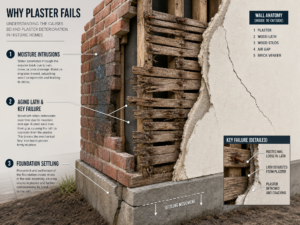
Here’s the blunt answer. Plaster in st louis homes fails because of three overlapping forces: moisture, aging substrate, and the slow settling of buildings that predate modern foundation engineering. Miss any one of these in a diagnosis, and the “repair” you paid for will crack again within a year or two.
Moisture and Humidity Cycles
Missouri weather doesn’t do subtlety. Summers are thick and swampy, winters swing cold and dry, and that constant push-pull stresses plaster in ways a drier climate never would. Lime and gypsum plaster both breathe, meaning they expand and contract with ambient humidity. A basement wall with a slow water intrusion problem will telegraph that dampness straight through a fresh patch job within a season if nobody addresses the source first. I’ve heard the same complaint from contractors and homeowners both, on forums discussing 1920s house plaster cracking: the crack wasn’t the problem, the moisture behind it was.
Aging Lath and Substrate Failure
Underneath most historic plaster is wood lath, thin strips nailed to studs that the wet plaster oozed into and gripped as it cured. A century of humidity swings rusts the nails, rots the wood, and eventually the plaster loses its grip entirely. That’s called key failure, and no amount of surface patching fixes it. You have to get behind the wall.
Settling in Historic Brick Homes
St. Louis sits on soil that isn’t exactly stable bedrock. Brick row houses in neighborhoods like Tower Grove or the Hill shift, ever so slightly, decade after decade. That movement telegraphs through plaster as diagonal cracks near doorframes and windows, the kind of structural cracks analysis experts distinguish from simple aging by their pattern and width, not just their existence.
What Does the Plaster Repair Process Involve?
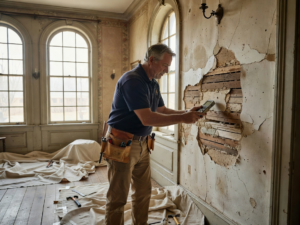
A real plaster repair doesn’t start with a trowel. It starts with a diagnosis, and skipping that step is the single biggest mistake homeowners make when hiring cheap.
Moisture Assessment First
Before anyone mixes a batch of plaster, a competent contractor tests the wall for moisture content. If a basement wall reads damp, no amount of skim coating will hold. This is non-negotiable, and frankly, if a contractor can’t show you a moisture reading or explain their remediation plan, that’s a red flag worth walking away from.
Lath Removal and Replacement
Once the wall’s dry, the damaged lath comes out. Rotted wood strips or rusted metal mesh get replaced with period-appropriate materials, anchored solidly into the studs. Skipping this and skimming plaster over compromised backing is how you get delamination eighteen months later, and it’s a shortcut some cheaper outfits take because it’s faster and nobody notices until the callback.
Multi-Coat Plaster Application and Finish Matching
Traditional plaster goes on in layers, a scratch coat, a brown coat, then a finish coat, each one keyed into the last. This isn’t the one-pass skim job you’d get with a drywall patch. Matching the texture of century-old walls takes an eye trained on st louis specifics, since local plastering styles vary from smooth Venetian-style finishes in older Central West End mansions to the coarser, hand-floated textures common in south city bungalows.
A few things worth insisting on before work begins:
- A written moisture assessment with a remediation plan, not a verbal assurance
- Photo documentation of the lath condition before it’s covered back up
- A materials plan specifying lime-based versus Portland-cement-based mixes
- A realistic timeline broken into milestones, not a vague “couple weeks”
How Does Woemmel Plastering Handle Historic Restoration?

Ornamental and Decorative Plasterwork
Cornices, ceiling medallions, running molding, the ornamental stuff that makes old St. Louis buildings feel like actual craftsmanship instead of drywall boxes. Restoring this kind of decorative plaster often means casting custom molds to match a design that hasn’t been manufactured in a century. It’s slow work. It’s also exactly the kind of detail that separates a plastering expert from a general contractor who does plaster on the side.
Lime-Putty vs Portland-Based Mixes
Not all plaster mixes behave the same, and using the wrong one on a historic wall is a fast track to cracking or poor adhesion. Lime-putty plaster is softer, more breathable, and historically accurate for pre-1930s construction. Portland-based mixes cure harder and faster but can trap moisture in older masonry, which sounds fine until you realize that trapped moisture eventually blows the finish coat right off.
| Mix Type | Best For | Cure Time | Breathability |
| Lime-putty plaster | Pre-1930s historic walls | Slower, weeks to fully cure | High |
| Portland-cement plaster | Newer construction, repairs needing speed | Faster, days | Lower |
| Gypsum-based plaster | Interior finish coats, smooth walls | Moderate | Moderate |
Texture and Color Matching for Vintage Walls
Anyone can slap mud on a wall. Matching a hundred-year-old hand-troweled texture so the patch disappears into the surrounding plaster surfaces, that takes a trained hand and, honestly, a bit of stubbornness about getting it right instead of just getting it done.
Is Woemmel Plastering Worth Hiring? What Do Customers Say?
Reviews across multiple platforms paint a fairly consistent picture. Feedback tends to cluster around three things: expertise with ornamental and historic plasterwork, communication that doesn’t go dark mid-project, and craftsmanship that holds up in older brick homes where a lesser repair would’ve cracked by the following winter. On local forums, homeowners recommend them alongside a small handful of other trusted names for lath repair and patching work, which in a market with several st louis companies competing for the same jobs, says something about consistency.
Should You Repair or Replace Damaged Plaster?

Not every crack means tear-out. Small settling cracks, hairline stuff along ceiling seams, usually just need a proper patch with mesh tape and a matched finish coat. But if you’re seeing bulging walls, plaster that sounds hollow when tapped, or lath visibly sagging away from the studs, replacement of that section is cheaper long-term than chasing patches that keep failing.
How Much Does Plaster Repair Cost in St. Louis?
St louis plaster repair costs vary widely depending on scope. Small crack repairs and patching might run a few hundred dollars. Full wall re-lathing and multi-coat plastering, especially with ornamental restoration involved, can climb into the thousands per room. Larger projects involving whole-house restoration or decorative cornice work push costs higher still, largely because of the labor-intensive nature of hand-applied finishes and custom molding work.
How Do You Choose the Right Plaster Repair Company?
Look for a track record with st louis houses specifically, not just general remodeling experience. Ask to see work samples from similar-era homes. Check whether they carry proper licensing, and look for accreditation markers like a Better Business Bureau rating, which signals a baseline of accountability. Skilled craftsmen will have no problem showing photos of past lath repairs and finished plaster walls side by side.
What Should You Ask a Contractor Before Signing?
Ask about their moisture assessment process first. Ask what plaster mix they’re using and why, given your home’s age. Ask how they handle unexpected structural problems discovered mid-project, since old lath sometimes hides surprises. And ask for a written warranty covering cracking or moisture relapse, not just a handshake promise.
How Long Does a Plaster Repair Job Take?

Small patch jobs might wrap in a day. Full-room re-lathing and multi-coat finishing, especially with lime plaster’s slower cure time, can take one to two weeks per room. Larger projects involving ornamental restoration or whole-house work stretch into months, particularly when custom molding needs casting and curing between coats.
Conclusion
Plaster repair in St. Louis isn’t a one-size-fits-all job, and treating it like one is how homeowners end up paying for the same crack twice. The moisture has to be dealt with first, the lath has to be sound, and the finish has to match a wall that’s been sitting there since before your grandparents were born. Get those three things right, and the patch disappears. Get them wrong, and you’ll be back here next spring, staring at the same hairline crack, wondering why it came back.