

Exterior plaster and stucco problems can reflect more than surface wear. A careful inspection connects the visible damage with moisture, substrate, movement, and the finish needed for a durable repair.
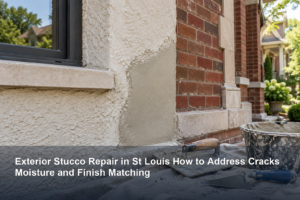
Fresh stucco repair being blended into the pale exterior of a St. Louis brick home
The short answer
Homeowners searching for exterior stucco repair in St. Louis may see cracks, loose areas, discoloration, or water marks and wonder whether a patch is enough. The right repair depends on the wall assembly, the source of moisture if present, the condition of the substrate, and how the existing finish was made. A surface coating cannot reliably solve a leak or unstable base. Woemmel Plastering lists exterior stucco and EIFS repair, crack assessment, texture matching, weatherproofing, and related plaster services across the St. Louis region. An inspection helps determine whether the work is a small localized repair or part of a larger moisture-management issue.
Recognize the difference between a surface crack and a system problem
A hairline crack in stucco can be cosmetic, but it may also be one sign of movement, moisture, an installation joint, or a bond problem. A wider crack, recurring crack, hollow sound, bulging, soft substrate, or water staining deserves a closer look. The same visible mark can have different causes depending on the building’s age, wall construction, exposure, and repair history. A photograph may help describe a concern, but it cannot show what is happening behind the finish.
Before applying filler or paint, note where the damage appears, when it began, whether it changes after rain or seasonal temperature shifts, and whether interior surfaces show related stains. Check for nearby roof edges, windows, flashing, gutters, downspouts, penetrations, and grade conditions that may direct water toward the wall. A plaster professional can assess the finish and substrate, while roofing or building-envelope specialists may be needed when the source involves another system.
Trace moisture before repairing the finish
Water management is a central part of many exterior stucco repairs. Water can enter at roof-to-wall transitions, window openings, penetrations, failed sealant joints, damaged flashing, or areas where drainage sends runoff against the building. Moisture can also originate from interior plumbing or condensation. A repair that hides a stain without identifying its source may fail again, even if the new surface looks smooth at first.
Ask what signs indicate active moisture and whether the evaluation includes moisture readings or inspection of adjacent details. A repair plan should explain whether the water source is known, which trade is responsible for correcting it, and when plaster repair should begin. Active leaks should be addressed before finish restoration. The specific method depends on wall assembly and site conditions; adding a generic waterproof coating can trap moisture or change how the wall dries. The right material and sequence should match the existing construction and the manufacturer’s requirements.
Identify the wall assembly before choosing materials
Exterior finishes described as stucco can be part of different assemblies. Traditional cement plaster over lath, a veneer finish, and an exterior insulation and finish system do not use identical layers or repair details. An installer needs to know what is behind the damaged surface before cutting, fastening, patching, or coating it. Repair products should be compatible with the base and adjacent finish.
Ask the contractor how they will identify the assembly and what evidence informs the repair method. If plans, previous invoices, or product labels are available, they may help. A repair should consider drainage, flashing, control joints, attachment, reinforcement, and the condition of the substrate where relevant. Do not assume that a material used on one home is appropriate for a different wall. Woemmel Plastering describes work with exterior stucco and EIFS where applicable; the assessment should establish which system is present at the specific property.
Understand how crack repairs are prepared
A durable crack repair starts by evaluating whether the edges are stable and whether the crack is likely to continue moving. Depending on the condition, the contractor may remove loose material, prepare a channel, add compatible reinforcement, rebuild layers, and reproduce the surrounding texture. A flexible surface filler may be appropriate for some small conditions, while a deeper repair may require rebuilding the assembly. The method should follow the product system and the wall’s construction.
Ask whether the contractor will explain the repair area before work begins and how the surface will be protected. If a crack is related to structural movement, a plaster patch alone may not address the underlying issue. The repair scope should identify any condition that needs a structural or water-management professional. Good workmanship includes appropriate curing and drying time; rushing a finish coat over damp or unstable material can affect the result. The contractor should explain what cannot be determined until the damaged area is opened.
Match texture color and transitions
A repaired wall may be structurally sound yet remain visually obvious if the finish does not match. Texture depends on material, aggregate, application technique, tool, and finish timing. Color can vary with paint age, sun exposure, fading, and previous coatings. A patch may need to extend far enough to create a clean transition, but widening the repair also affects cost and disruption.
Ask how the contractor will test texture and color, whether a sample area is possible, and whether final painting is part of the proposal. For a historic or architecturally distinctive property, photographs of undamaged areas and old records can help guide the match. Natural variation may make an exact match impossible, especially when a finish has aged or a proprietary material is no longer available. The estimate should explain whether the objective is a close blend, a full-wall finish, or a deliberate visual transition so expectations are realistic.
Plan exterior work around weather and access
Exterior plaster products need suitable temperature and moisture conditions during application and curing. Rain, freezing temperatures, intense sun, wind, and humidity may affect timing or require protection. A contractor should explain what conditions matter for the chosen system and how the work area will be shielded. St. Louis weather can change quickly across seasons, so the calendar alone does not determine whether a surface is ready.
Access also affects planning. Scaffolding, ladders, landscaping, sidewalks, vehicles, and neighboring property may need protection. Ask how dust and debris will be managed, where materials will be staged, and whether the crew needs access to water or power. If an exterior repair is part of a larger roof, window, or masonry project, coordinate the sequence to avoid damaging fresh work. A clear schedule should include preparation, repair, curing, finish, and cleanup rather than only a start date.
Compare estimates by scope rather than by patch size
Two estimates for stucco repair can differ because one addresses only a visible crack while another includes removal, substrate work, moisture correction, reinforcement, finish matching, and repainting. Compare the actual scope, materials, access assumptions, exclusions, and warranty terms. Ask what happens if concealed damage appears after the surface is opened and how the contractor will seek approval for added work.
A low price is difficult to evaluate if it does not identify the source of the problem or specify the repair layers. A detailed proposal should name the affected area, explain the planned preparation and repair, describe the finish, and clarify who handles any related water source. Ask whether the price includes cleanup and disposal. If another trade must correct a leak or structural issue first, make the handoff explicit. A transparent estimate helps homeowners compare like with like instead of choosing based only on the visible square footage.
Protect the building during repair
Exterior repair work can involve cutting, scraping, mixing, and applying materials near windows, doors, planting beds, pavement, and painted surfaces. Ask how the crew will protect the property, control debris, and keep water from entering an opened wall. If damaged material is removed, confirm whether temporary weather protection will remain until the assembly is restored.
The work area should be secured so residents and visitors can avoid tools and wet materials. If the home has historic features, fragile trim, or landscaping near the repair, point those out before the crew starts. Photograph the area before work to create a record of existing conditions. Discuss whether occupants need to keep windows closed or avoid a portion of the yard. These practical steps reduce surprises and make it easier to inspect the repair once it is complete.
Review the finished repair and maintenance needs
At completion, compare the repaired area with the agreed scope. Confirm that loose material was removed, the surface is bonded, edges are finished, and the texture and color match the stated objective. If the repair addressed moisture, ask what was corrected and whether any monitoring is recommended. Keep product information, photographs, and the invoice with home records.
Routine observation can help identify new issues early. After a major storm, notice whether water is collecting near the wall, a gutter is overflowing, or a previously repaired area has changed. Do not seal a new crack without understanding whether it is active or related to a building detail. Contact a qualified professional if the surface begins to bulge, detach, remain damp, or develop recurring staining. Woemmel Plastering offers plaster repair and exterior stucco services; homeowners can confirm the current service area and inspection process directly with the company.
How to tell whether stucco damage is cosmetic or deeper
Hairline cracks, chipped finish, stains, bulging, and soft areas can have different causes. A surface crack may be limited to the finish, while a recurring crack or hollow, loose area can indicate movement or moisture behind the wall. Water marks near windows, doors, rooflines, or penetrations deserve attention because the visible stain may be downstream from the entry point. Painting over a stain can conceal the evidence without addressing the source.
A useful assessment records where the damage appears, when it becomes worse, and whether it changes after rain or freeze-thaw cycles. Photograph the area from a distance and close up, and note nearby gutters, downspouts, flashing, and landscaping. Avoid probing or removing material without knowing what lies behind it. A qualified contractor can assess the substrate, identify likely moisture pathways, and explain whether repair should include related flashing or drainage work.
Why matching texture and color takes preparation
A repair can be structurally sound and still stand out if the finish does not match. Stucco appearance depends on aggregate, application method, texture pattern, curing, age, weathering, and paint or finish coat. A small patch may dry differently from a broad wall, especially when the surrounding surface has faded. A contractor may need to test a sample or extend the repair to a natural break to create a more consistent appearance.
Ask how the repair will blend with adjacent areas and what limitations come with matching an older finish. Share any leftover paint, product labels, or original construction information if available. The contractor can explain surface preparation, curing time, and when repainting is appropriate. Setting expectations before work starts helps homeowners understand that a repair aims to restore protection and appearance, but exact invisibility may not be possible on a weathered exterior.
Questions to ask before hiring for exterior stucco work
Ask whether the estimate includes inspection of the damaged area, removal of loose material, substrate preparation, repair coats, finish texture, and cleanup. Clarify whether the contractor will investigate moisture entry or whether a separate roofer, window specialist, or mason may be needed. A proposal should identify the locations and approximate extent of the work rather than relying on a vague line such as “patch stucco.”
Discuss access, weather delays, curing, dust, landscaping protection, and how newly discovered damage will be approved and priced. Ask about insurance, references for similar work, and the expected schedule. A good contractor should explain why the selected repair scope addresses the observed condition and what maintenance can reduce repeat damage. Written documentation helps both parties understand what is included and what would require a change order.
Maintain the exterior after the repair
After the repair, check the area periodically for new cracks, discoloration, separation, or recurring dampness. Keep gutters and downspouts clear and direct water away from the wall; inspect sealant and flashing around openings as part of normal home maintenance. Trim plants that hold moisture against the finish and avoid directing sprinklers at the exterior. These measures do not replace a properly designed repair, but they can reduce common sources of repeated wetting.
Follow the contractor’s guidance about curing, cleaning, and repainting. Avoid pressure washing a new repair before it is ready. If staining returns or the finish changes after a storm, photograph it and contact the contractor to review whether water is entering from another location. A timely assessment can prevent a small maintenance concern from becoming extensive damage to the wall assembly.
Frequently asked questions
What causes cracks in exterior stucco?
Cracks can result from shrinkage, movement, impact, moisture, installation details, or other conditions. Their width, pattern, recurrence, and surrounding wall condition help a professional determine whether a surface repair is adequate.
Can stucco be repaired after a leak?
Yes, but the water source should be identified and corrected before the finish is restored. The repair also depends on whether the substrate or wall layers were damaged. A surface patch alone may not stop a recurring leak.
How do I know if my stucco is EIFS or traditional plaster?
Appearance alone may not be enough to identify the assembly. A professional can inspect details and available records. Knowing the system matters because materials, drainage details, and repair procedures differ.
Will a stucco patch be invisible?
A contractor can work to blend texture and color, but exact matching may be difficult because of fading, aging, and variations in original application. Ask whether the scope includes a sample, a larger blend area, or repainting.
Can I fill a stucco crack myself?
A small stable cosmetic crack may appear simple, but recurring or wider cracks and signs of moisture or movement need evaluation. Using an incompatible filler or coating can hide evidence or create another problem.
How long does exterior stucco repair take?
Timing depends on the size and depth of damage, substrate condition, material, drying and curing requirements, weather, access, and whether another trade must correct a leak. Ask for a schedule that includes each stage.
What should an exterior stucco repair estimate include?
It should identify the affected area, suspected cause, preparation, materials, repair layers, finish matching, painting, access, cleanup, exclusions, and the approval process if hidden damage is found.
Can stucco be repaired in cold or rainy weather?
Some materials require specific temperature and moisture conditions. A contractor should explain the requirements for the chosen system and how the area will be protected. Weather may affect the schedule.
Does Woemmel Plastering repair exterior stucco in St. Louis?
Woemmel Plastering lists exterior stucco and EIFS repair among its services in the St. Louis region. Contact the company to confirm the property’s location, current availability, and inspection scope.
Should I paint stucco after a repair?
Painting depends on the existing finish, material, moisture condition, and repair scope. The contractor should explain whether paint is included, how long the surface needs to cure, and whether a coating is compatible.
When should I call a professional about stucco damage?
Seek an inspection for recurring cracks, bulging, loose or hollow areas, water stains, soft material, or damage around windows and roof transitions. These signs may involve more than surface appearance.
Does a stucco repair warranty cover future leaks?
Warranty coverage varies by contractor and work scope. Ask what workmanship is covered, for how long, and what exclusions apply. A repair warranty may not cover a separate roof, flashing, plumbing, or drainage problem.